
Heritage • Pattern • Colour • Home
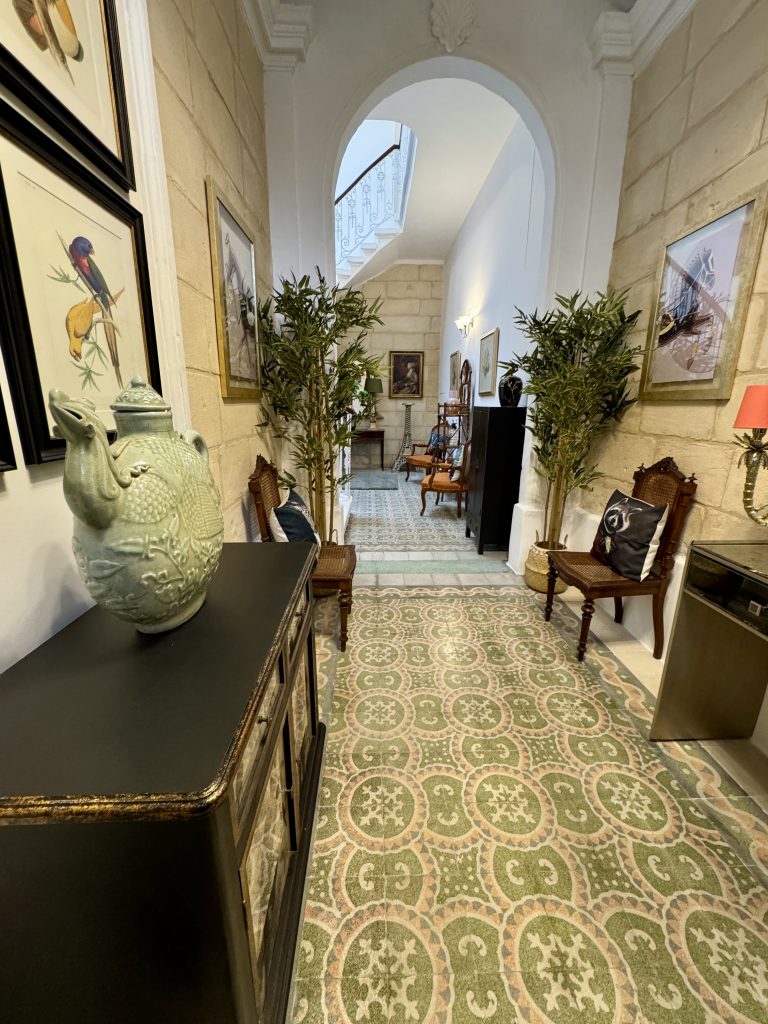
A traditional Maltese townhouse interior, where the floor becomes part of the story of the home. Book it now
WHY THIS MATTERS TO US
Our Malta Townhouse Rentals logo was inspired by the language of traditional tile design. That connection is at the heart of our properties: we preserve and celebrate the details that make a Maltese home feel unmistakably Maltese.
Maltese tiles are much more than a beautiful feature of an old house. They are a small piece of Malta’s history beneath our feet.
For generations, colourful patterned tiles were used throughout Maltese homes, particularly in hallways, kitchens, courtyards, bedrooms and living spaces. In many traditional houses, the floor was one of the first things visitors would notice.
A carefully laid pattern of geometric shapes, flowers, stars or intricate repeating designs could transform an otherwise simple limestone room into something full of colour and character.
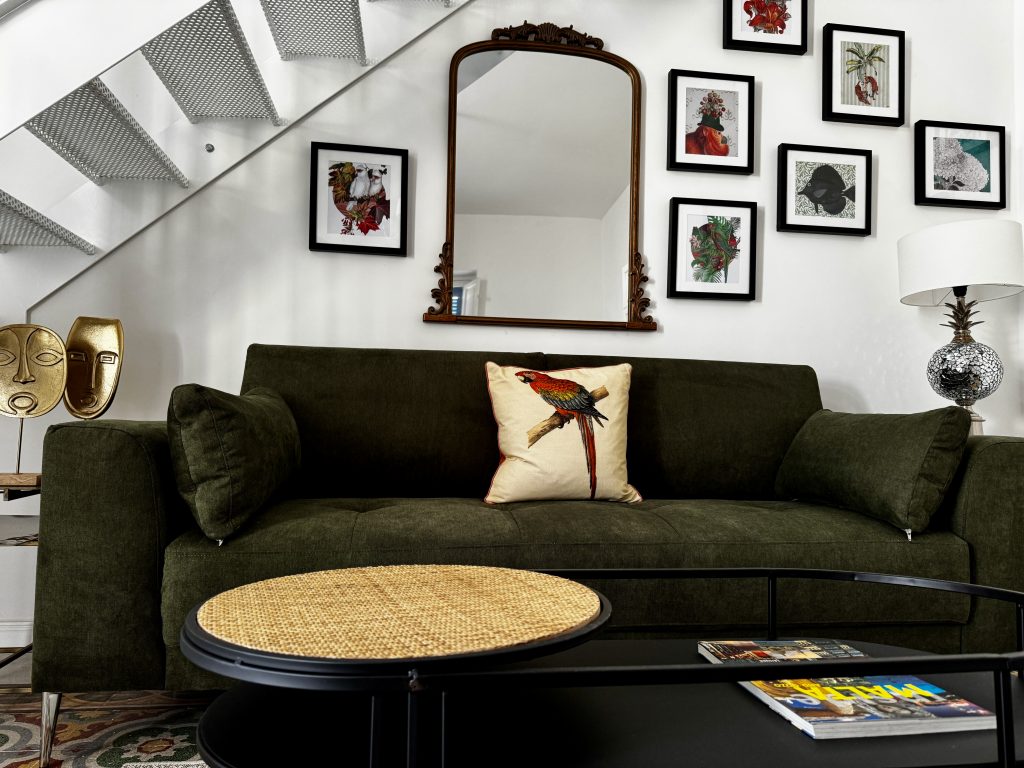
Patterned flooring working alongside simple walls, furniture and traditional details.
This is one reason tiled floors are so important when experiencing a traditional Maltese townhouse. They are not an isolated decoration; they work together with limestone, timber, light and furniture to create the atmosphere of the home.
Traditional Maltese floor tiles are often associated with encaustic cement tiles, although Malta has used a variety of ceramic and cement-based tiles over the years. Their distinctive appearance comes from the way different colours and patterns were incorporated into the tile itself, rather than simply painted onto the surface.
The palette can be wonderfully Mediterranean: deep reds, ochres, greens, blues, creams, yellows and earthy tones. Some designs are bold and geometric, while others feature delicate floral or star-like motifs.
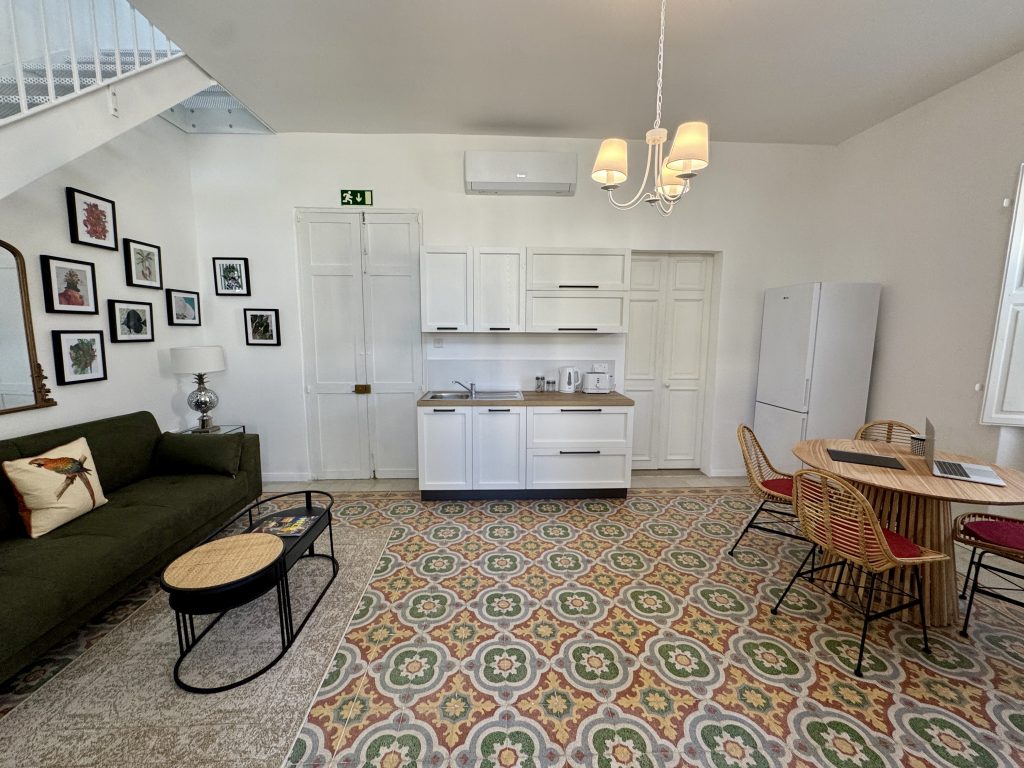
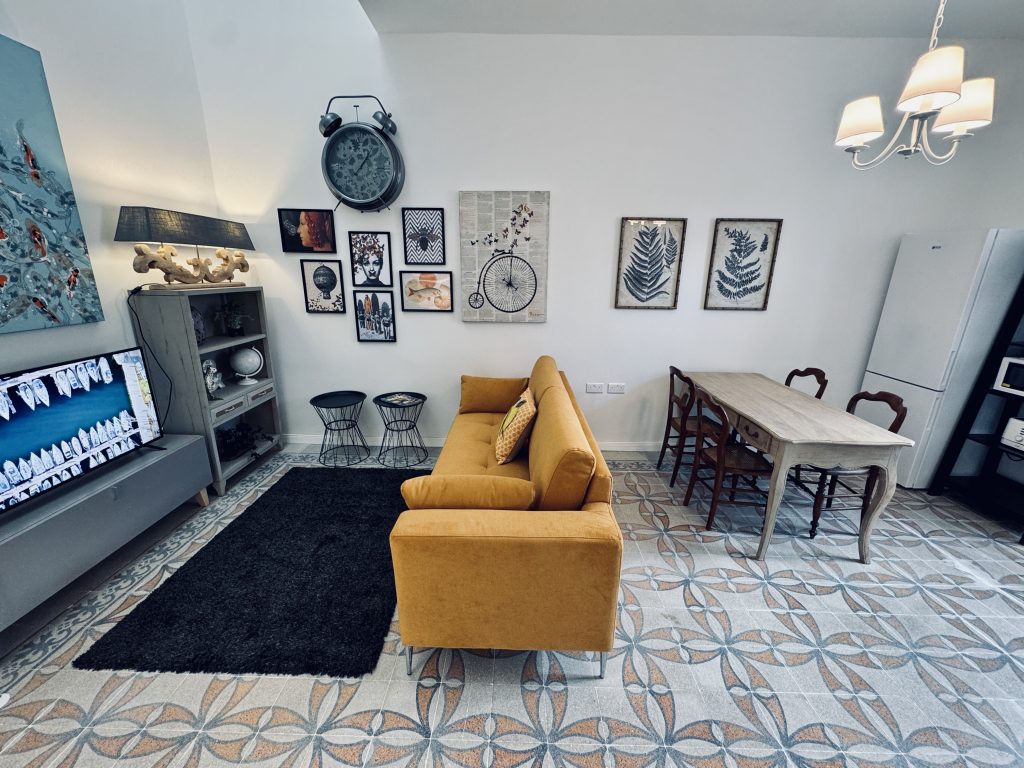
One of the most fascinating things about these floors is that a single tile was rarely intended to stand alone. Individual tiles were combined to create a much larger repeating pattern across an entire room. The result can resemble a colourful carpet made from stone and cement.
LOOK CLOSER
What first appears to be one large design is often a carefully repeated arrangement of individual tiles.
Look closely at an old Maltese tiled floor and you may discover a remarkable amount of detail.
Common designs include diamonds, stars, circles, crosses, flowers, leaves and interlocking geometric shapes. Some patterns are symmetrical and precise, while others create the impression of movement as they repeat across the room.
Borders were also important. A central pattern might be surrounded by a decorative frame, creating separate visual areas within a room.
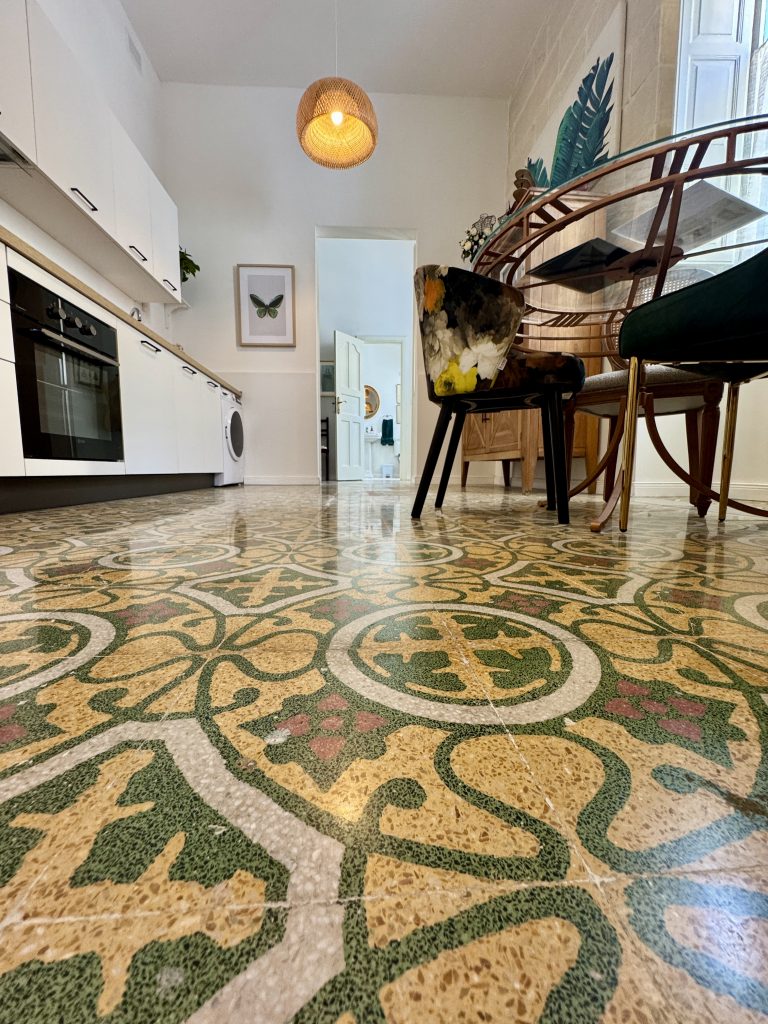
A close view reveals how colour, symmetry and repeating motifs combine to create a larger composition.
This use of repetition was not unique to Malta. Similar traditions can be found throughout the Mediterranean, reflecting centuries of cultural exchange. Malta’s position at the crossroads of the Mediterranean meant that architectural and decorative influences arrived from many directions and were gradually adapted into something distinctly Maltese.
Perhaps the best way to understand the importance of these tiles is to imagine a traditional Maltese townhouse. The walls might be built from the island’s famous honey-coloured limestone. Wooden doors and shutters provide warmth and character. A small internal courtyard brings light into the house. And beneath it all is a patterned floor.
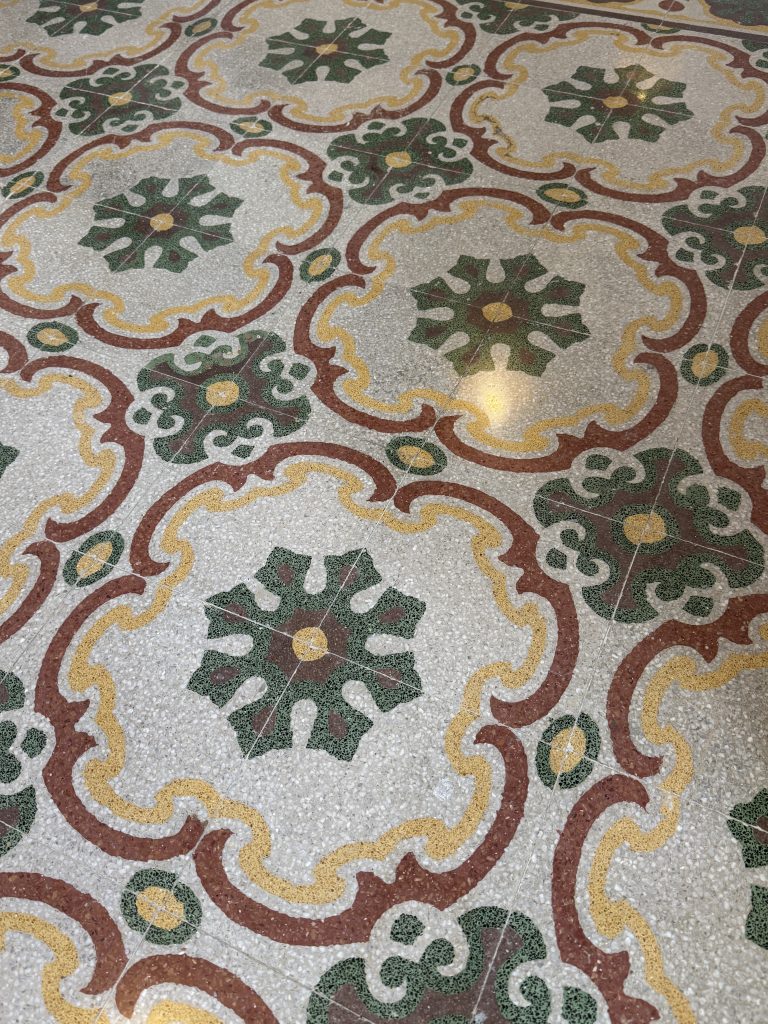
Traditional pattern and contemporary living can sit comfortably together.
The tiles helped introduce colour into homes that were otherwise dominated by the natural tones of limestone and wood.
They were practical too. Hard-wearing tiled floors were relatively easy to clean and well suited to Malta’s warm climate. At the same time, they gave even modest homes a sense of decoration and individuality.
A HOME, NOT A MUSEUM
For many Maltese families, the floor was not simply a functional surface. It was part of the character of the home — lived on, lived with and passed through generations.
One of the charms of old Maltese tiles is that they can show the passage of time.
Years of footsteps can soften their surface. Colours can become slightly muted. Some tiles may crack or chip, while others remain remarkably intact after decades of use. And because old houses were often renovated over generations, it is not unusual to find different tile patterns in different parts of the same property.
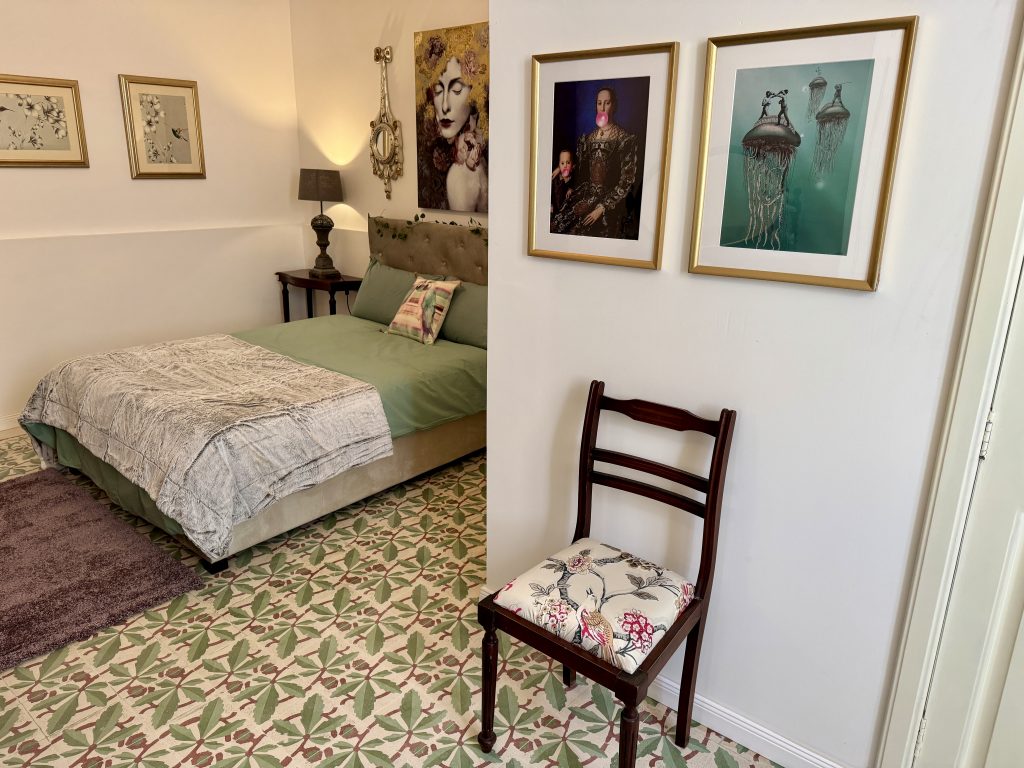
A lived-in floor: pattern, patina and the marks of time become part of its character.
A worn tile is therefore not necessarily something to be discarded. Its imperfections can be part of its story.
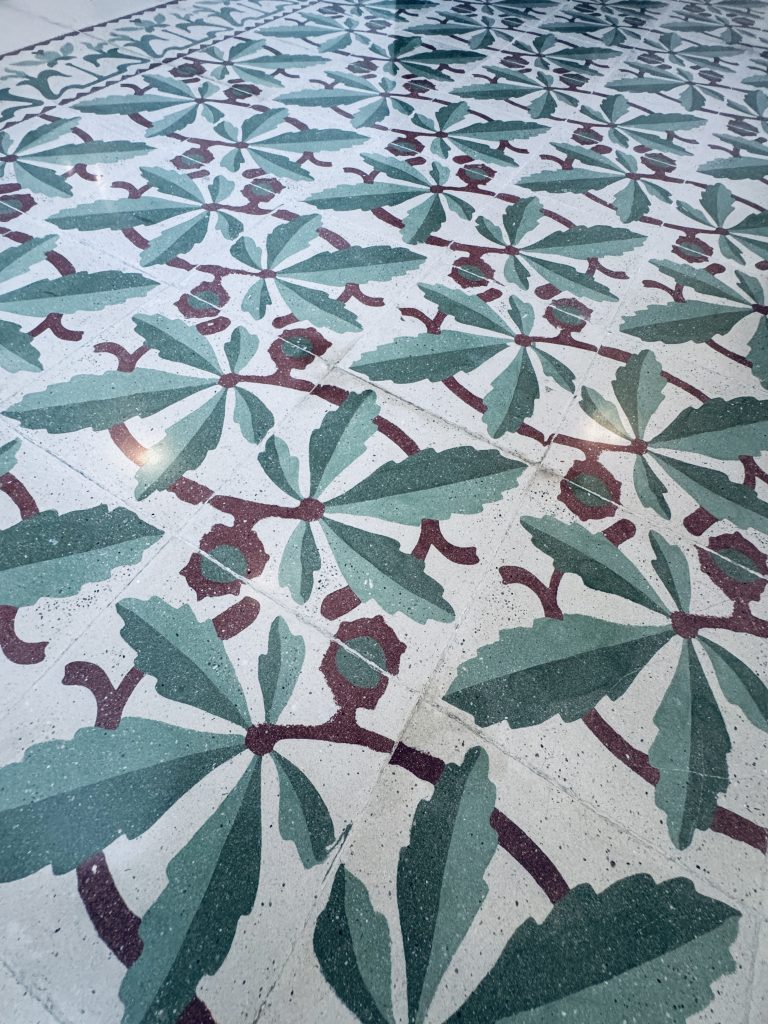
Image caption: Floral and botanical motifs bring another dimension to the Maltese tile tradition.
Today, there is a growing appreciation for Malta’s traditional architecture and the details that make its historic homes special.
When old townhouses are restored, original tiles are often carefully preserved wherever possible. In some cases, damaged tiles can be repaired or replaced using traditionally inspired designs. New tiles are also being produced that take inspiration from the colours and patterns of the past.
This is particularly important in Malta’s historic urban areas, where the character of a house is created by hundreds of small details: the limestone façade, timber shutters, traditional doors, balconies, staircases and, of course, the floor beneath your feet.
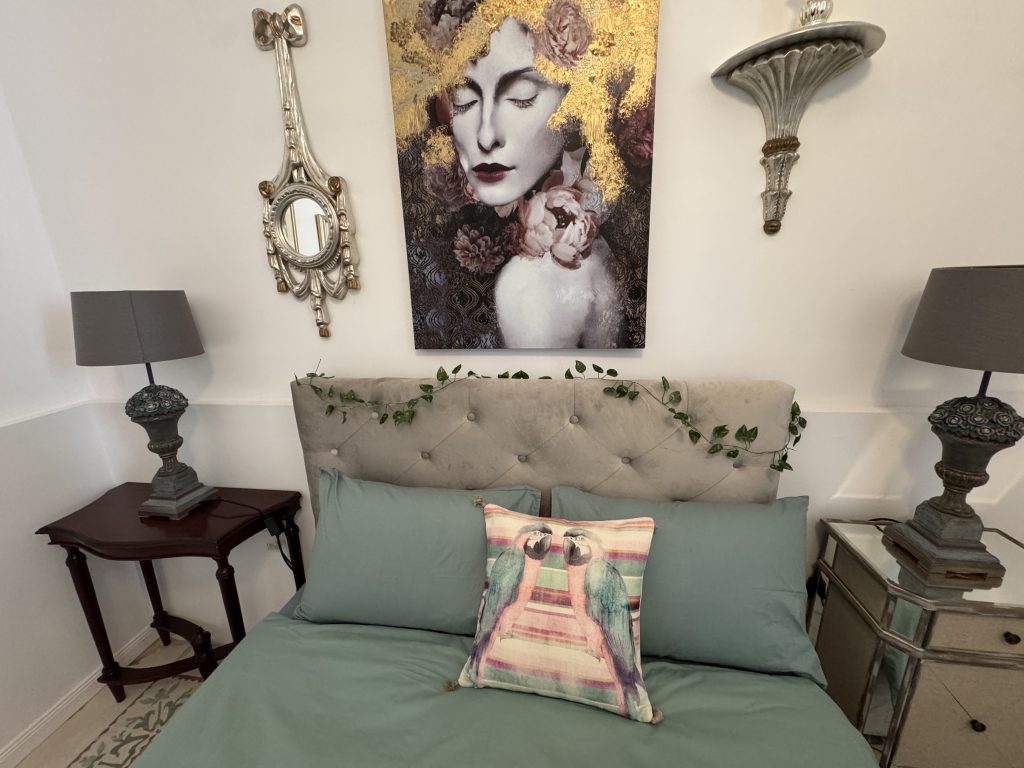
Preserving original details allows a restored home to retain a sense of authenticity
THE MALTA TOWNHOUSE RENTALS PHILOSOPHY
Our properties are chosen and presented with an appreciation for Malta’s architectural character. Where original tiled floors remain, they are not just an amenity — they are part of the experience we want guests to discover.
For visitors, a Maltese tiled floor can initially seem like a beautiful decorative feature. But once you understand its history, you begin to see it differently.
These patterns were walked across by generations of Maltese families. They formed the backdrop to everyday life — morning coffees, family meals, children playing, celebrations, conversations and quiet evenings at home.
OUR LOGO • OUR INSPIRATION
The decorative emblem in the Malta Townhouse Rentals logo was inspired by the visual language of Maltese tiles — symmetry, floral forms, curves and repetition. It is a small reminder of what we value: homes with character, heritage and a story to tell.
And in restored houses today, when an original tiled floor is carefully retained rather than removed, a small piece of that history continues to live on.